← Back Workout at Home: No Gym, No Problem (Your Spine Will Thank You Later) Burpee Exercise Benefits: Why This Full-Body Move Deserves a Spot in Your Routine →
When it comes to building a stronger, more resilient body, few exercises deliver as much value as the plank. Deceptively simple in appearance, this isometric movement challenges multiple muscle groups simultaneously, making it one of the most efficient additions to any fitness routine. Whether you're a beginner just starting out or an experienced athlete looking to reinforce your foundation, the plank offers measurable, lasting benefits that extend well beyond a toned midsection.
The Wide-Ranging Benefits of Plank Exercises for Your Body

The plank is far more than a core exercise. Holding a proper plank position activates the shoulders, chest, glutes, hamstrings, and even the muscles supporting the spine. One of its most notable benefits is improved posture. By consistently strengthening the muscles along your back abdomen, your body naturally holds itself more upright during everyday activities. This can reduce the chronic tension that builds up from prolonged sitting or poor alignment. Additionally, planks help improve balance and coordination by training the deep stabilizing muscles that support joint health. Regular practice has also been associated with reduced lower back pain, a stronger core takes pressure off the lumbar spine. Beyond the physical, holding a plank requires mental focus and discipline — qualities that translate directly into other areas of training daily life. Because the exercise requires no equipment and minimal space, it removes every barrier to consistent practice, making it a sustainable choice for long-term fitness.
How to Strengthen Your Entire Core With Proper Plank Form

Performing a plank correctly is essential to unlocking its full range of benefits while avoiding unnecessary strain. Begin by placing your forearms flat on the ground, elbows stacked directly beneath your shoulders. Extend your legs behind you and rise onto your toes, creating a straight line from your head to your heels. Engage your core by drawing your navel gently toward your spine, and squeeze your glutes to prevent your hips from sagging or rising Keep your neck neutral by gazing at point just in front of your hands rather than craning upward or tucking your chin too deeply. Breathing steadily throughout the hold is critical — many people unconsciously hold their breath, which reduces oxygen delivery to working muscles and shortens endurance. Start by holding the position for 20 to 30 seconds, then progressively extend your duration as strength improves. Variations such or high plank, side plank, and plank with shoulderaps introduce new challenges that prevent plateaus and keep movement engaging Incorporating planks into your routine just three to four times per week can yield noticeable improvements in core strength, stability, and overall athletic performance within few weeks.
Plank Exercise: Build Core Strength, Stability & Better Posture
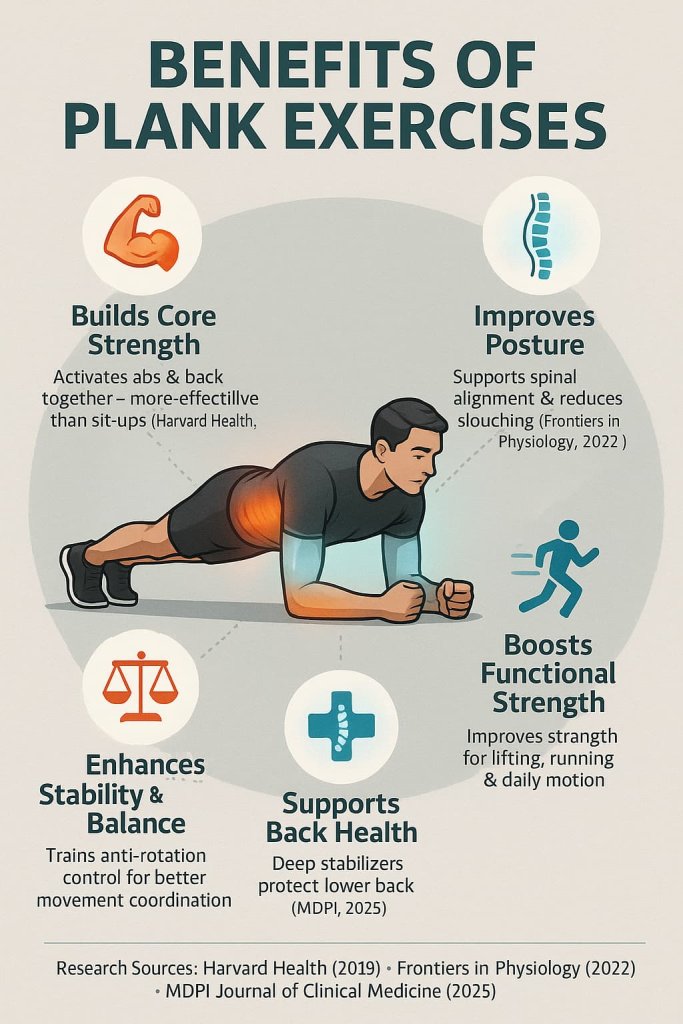
Plank Exercise: Build Core Strength, Stability & Better Posture
Plank Exercise: Build Core Strength, Stability & Better Posture
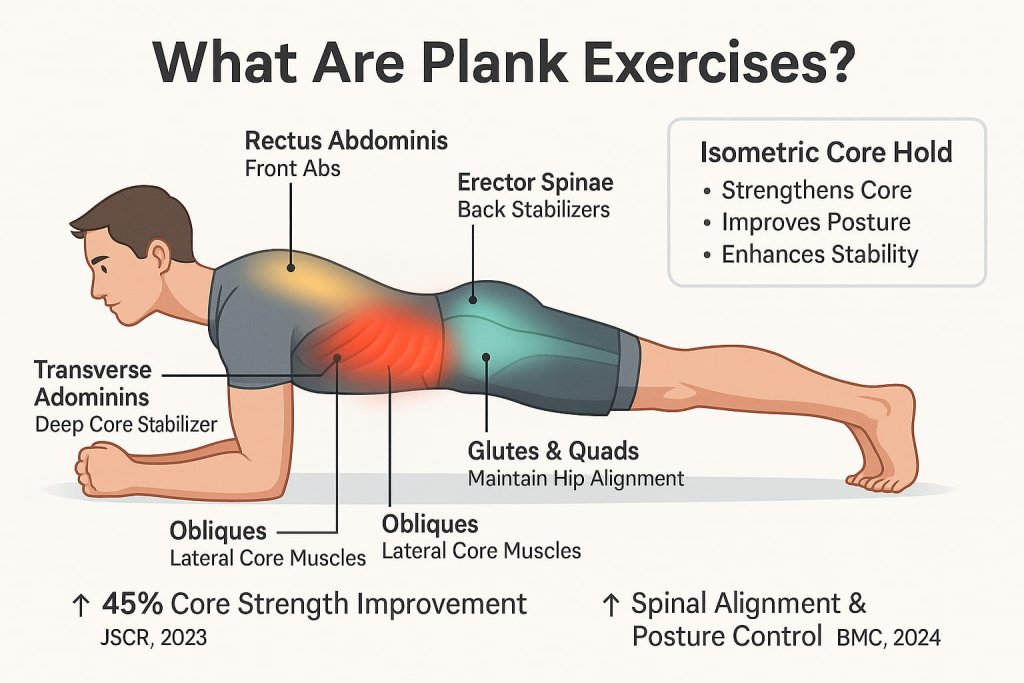
Plank Exercise: Build Core Strength, Stability & Better Posture
How To Strengthen Your Core: A Comprehensive Guide To A Stronger You
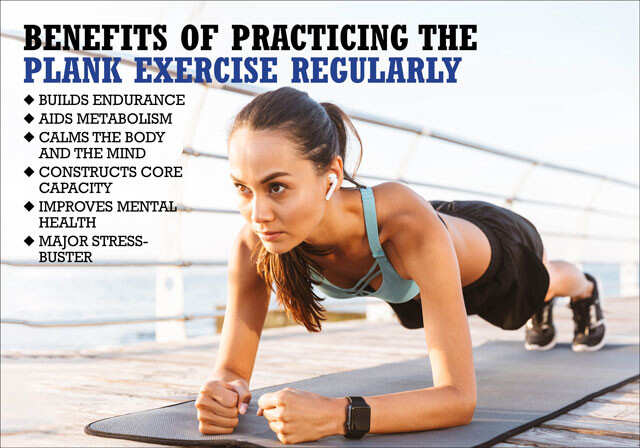
How to Strengthen Your Core: A Comprehensive Guide to a Stronger You